Earn Points & Save Pounds
HEPA Filters for Woodworking Workshops
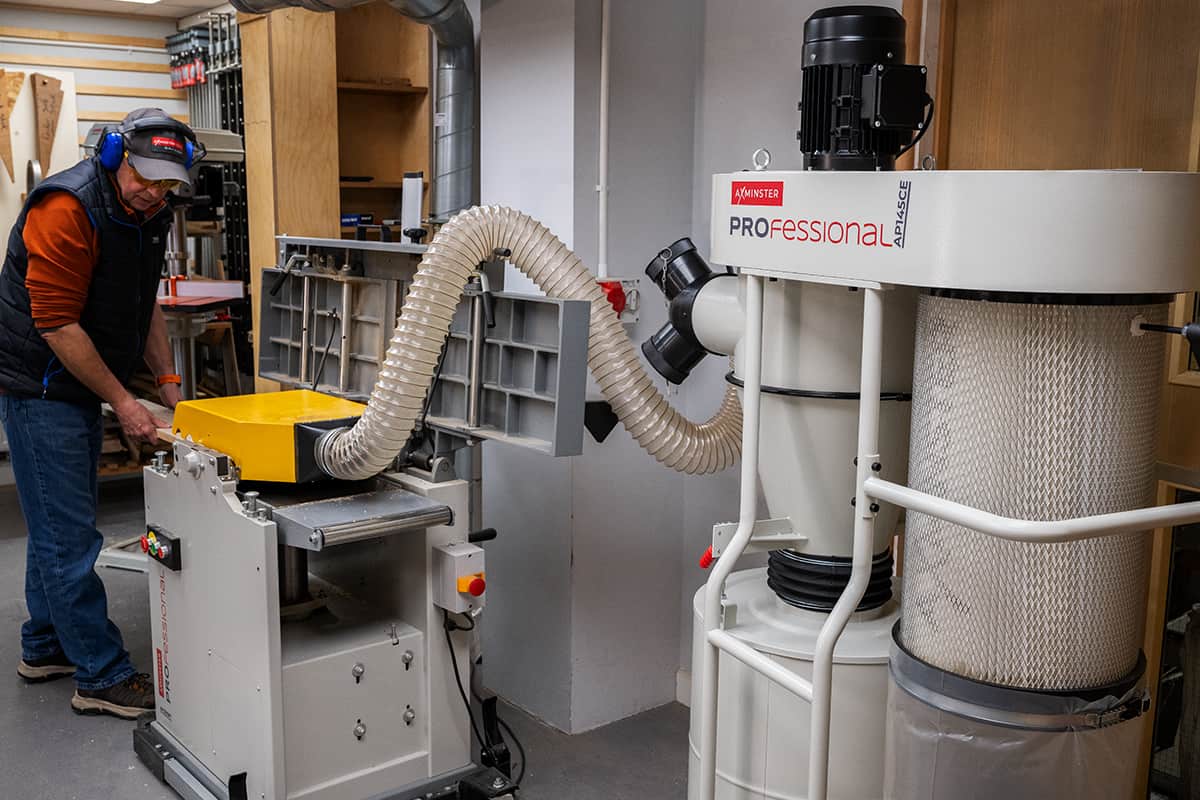
Wood dust is an unavoidable by-product of woodworking, whether you’re cutting hardwood, sanding MDF, turning bowls or machining sheet materials. While larger chips are easy to collect, the real concern is the ultra-fine airborne dust that can remain suspended in the workshop long after a machine has stopped running. This is where HEPA filtration comes into its own.
For professional workshops and serious hobbyists alike, upgrading to a HEPA filter can significantly improve air quality, create a cleaner working environment and help capture the finest dust particles that standard filters may allow to pass through. Axminster Tools offers a range of HEPA upgrade filters and HEPA-equipped extraction systems designed specifically for woodworking applications.
What is a HEPA filter?
HEPA stands for High Efficiency Particulate Air. These filters are designed to capture exceptionally small airborne particles, making them highly effective for workshop dust control.
In woodworking, HEPA filtration is particularly useful when working with:
- MDF and sheet materials
- Fine sanding operations
- Drum sanders
- Hardwood dust
- Routing and CNC machining
- Woodturning projects
Here at Axminster Tools, we specifically recommend HEPA filtration for capturing very fine dust. Particularly from processes such as drum sanding with fine abrasives where standard collection systems may struggle to filter smaller particles effectively.
Why is fine wood dust a problem?
Many woodworkers focus on collecting chips and sawdust, but the smallest dust particles are often the most problematic. Unlike larger waste particles, fine dust can remain airborne for extended periods and spread throughout the workshop.
Even workshops with effective chip collection can still contain airborne dust generated by:
- Sanding
- Routing
- CNC machining
- Woodturning
- Table sawing sheet materials
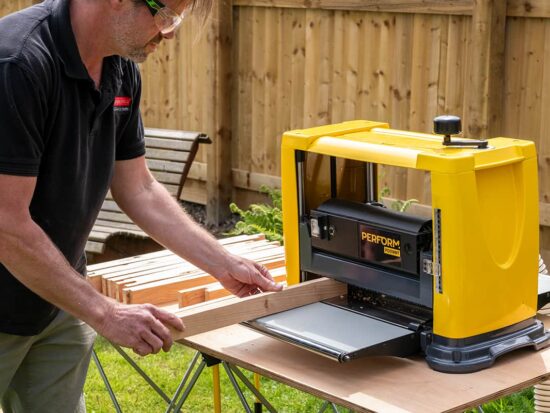
- Planing and thicknessing timber
This is why many woodworkers combine machine extraction with fine dust extraction systems and upgraded filtration. Our dust extraction guidance highlights the importance of matching filtration systems to the type of waste being produced in the workshop.
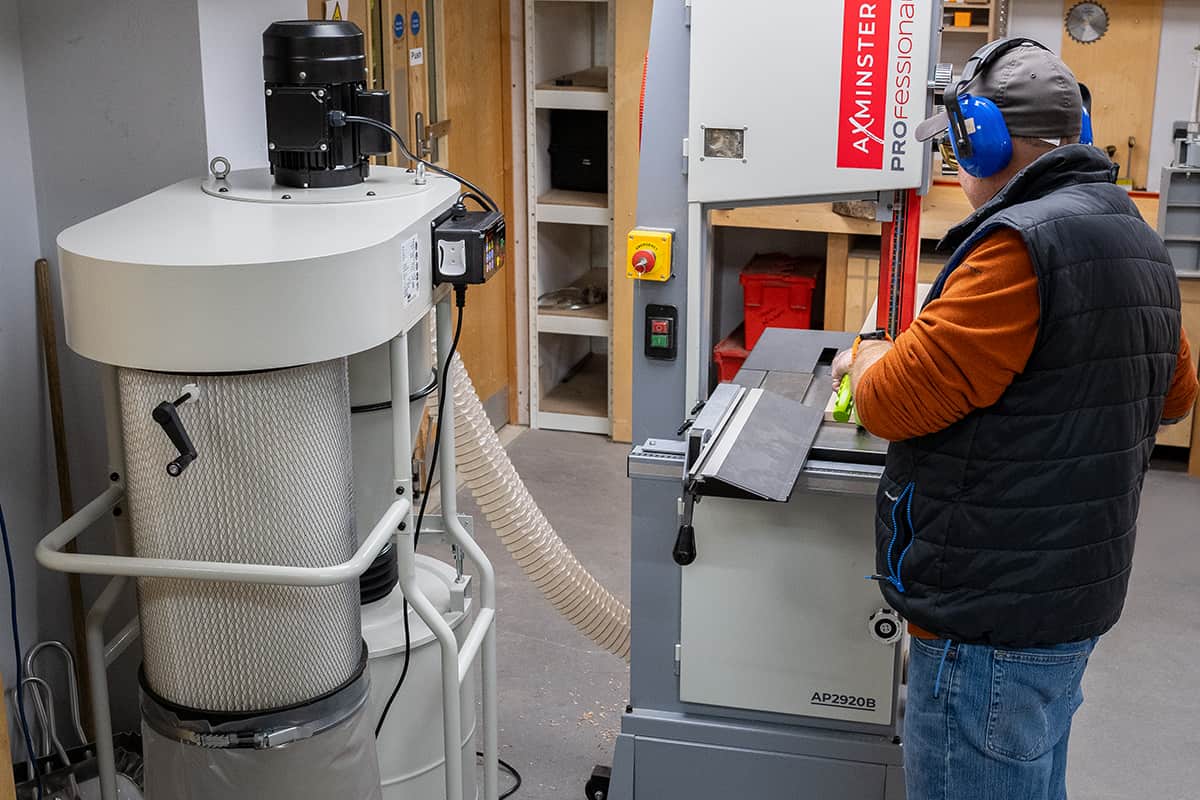
HEPA filters VS standard workshop filters
Many traditional chip extractors use coarse filter bags designed primarily for moving large volumes of air and collecting chips and shavings. While effective for waste collection, they are not always optimised for capturing the very finest airborne dust.
Standard filters
Standard extractor bags are typically best suited for:
- Table saw waste
- Bandsaw waste
- Planer shavings
- Thicknesser chips
- General woodworking debris
They are designed around high airflow but may not provide the same level of fine particle filtration as HEPA systems.
HEPA filters
HEPA filtration offers advantages including:
- Improved fine dust capture
- Cleaner workshop air
- Better performance for sanding operations
- Reduced airborne particles
- Enhanced workshop cleanliness
- Improved protection when machining MDF and hardwoods
For woodworkers producing significant volumes of fine dust, a HEPA filter is often one of the most worthwhile workshop upgrades.
When should you upgrade to HEPA?
A HEPA upgrade is particularly worthwhile if you:
- Regularly sand timber or composite materials
- Use a drum sander
- Machine MDF frequently
- Operate a CNC router
- Work in an enclosed workshop
- Spend long hours in the workshop
- Want improved workshop cleanliness
- Have an existing cyclone extractor that supports HEPA upgrades
Many woodworkers find that the visible reduction in airborne dust and surface dust accumulation alone justifies the investment.
Key benefits of HEPA filtration
Cleaner air
Captures finer airborne particles than many standard filtration systems.
Better dust control
Particularly effective on sanding and MDF dust.
Improved workshop cleanliness
Helps reduce settled dust on machines, benches and completed projects.
Upgrade existing equipment
Many Axminster Tools dust extractors can be enhanced with dedicated HEPA cartridge filters.
Future-proof your workshop
Ideal for workshops increasing their use of CNC machines, fine sanding equipment or engineered board materials.
Quick summary
- HEPA filters are designed to capture extremely fine airborne dust particles.
- They are especially beneficial for sanding, CNC machining and MDF processing.
- Standard filter bags are typically designed for larger chips and coarse dust collection.
- HEPA filtration helps improve workshop air quality and cleanliness.
- Existing extractors can often be upgraded using dedicated HEPA cartridge filters.
- Axminster Tools offers HEPA filters for AP145CE, AP750DE, AW750DE, AP1500DE and AP2200DE systems.
- Complete HEPA extractor solutions are available through the Laguna P|Flux range.
- HEPA filtration is one of the most effective upgrades for workshops producing fine wood dust.
Final thoughts...
If your workshop generates significant amounts of fine dust from sanding, routing, turning or CNC machining, upgrading to a HEPA filter is a smart investment. While standard filters remain perfectly suitable for collecting larger chips and shavings, HEPA filtration provides an additional level of protection by capturing the finer dust particles that are often the hardest to control. Whether you're fitting an Axminster HEPA Cartridge Filter for an existing extractor or investing in a dedicated HEPA cyclone extraction system, you'll benefit from cleaner air, a tidier workshop and a more effective dust extraction setup overall.
Discover more...
We hope you've enjoyed learning about HEPA filters. If you're still unsure about which dust extraction is right for your workshop, then why not read this helpful Buying Guide on dust extraction or why not take a look at some of our blogs?